Dubai’s Shift to Conscious Living: Why Wellness Homes Are Winning
Luxury living in Dubai isn’t what it used to be. Gone are the days when “luxury” simply meant shiny surfaces, soaring heights, and dramatic skylines. Today’s smart buyers want well-being built into every square foot, and developers are finally listening.
This shift from traditional luxury to conscious living isn’t a passing trend. It’s a data-driven transformation that’s reshaping Dubai’s residential DNA and redefining what luxury real estate means in 2026 and beyond.
Wellness Isn’t a Buzzword, It’s a Market Force
According to the Global Wellness Institute, the global wellness real estate market was valued at approximately $548 billion in 2024 and is projected to cross $1.1 trillion by 2029, growing at nearly 15% annually, almost three times faster than traditional construction.
Zooming into the UAE, the wellness economy is a regional powerhouse, now valued at about $40.8 billion, with wellness real estate, a core contributor to that growth.
Even more striking is what’s happening locally. The UAE’s residential wellness property market is expected to grow from AED 503 million in 2024 to nearly AED 31 billion by 2027; that’s almost seven-fold growth in just three years.
This isn’t niche demand. This is mainstream buyer behavior actively shaping Dubai real estate development.
Why Dubai Buyers & Investors Prioritize Wellness
Buyer intent has evolved, and the data makes that clear. Recent trend analysis and survey insights show that wellness is now a key purchase driver:
Nearly 60% of homebuyers and investors in Dubai prefer communities with wellness-centric features.
Around 90% of UAE residents say they prefer homes with superior air quality and abundant natural light.
Over 80% of buyers are willing to pay a premium for wellness-focused elements like water purification, green spaces, and nature-inspired design.
That’s not speculation; that’s consumer preference backed by survey data and behavioral trends.
Dubai Real Estate Is Evolving, Wellness Is Winning
Despite global market cycles, Dubai’s property sector continues to show remarkable resilience. In the first half of 2025 alone, Dubai attracted approximately 94,700 investors, completing over 91,000 residential transactions valued at AED 262 billion, a 36.4% increase in transaction value year-on-year.
But here’s the twist: neighborhoods that integrate wellness-oriented amenities, green spaces, pedestrian paths, and outdoor recreation zones are now dominating high-value sales, especially properties above AED 10 million.
This reflects the market’s maturing demand, i.e., well-being isn’t a luxury extra; it’s a price multiplier.
Developers Are Responding: Designing for Health, Not Just Hype
Top real estate players are pivoting toward developments that prioritize a healthy way of life:
What Conscious Living Really Means:
Natural ventilation, abundant daylight, and air purification systems
Biophilic design and integrated green corridors
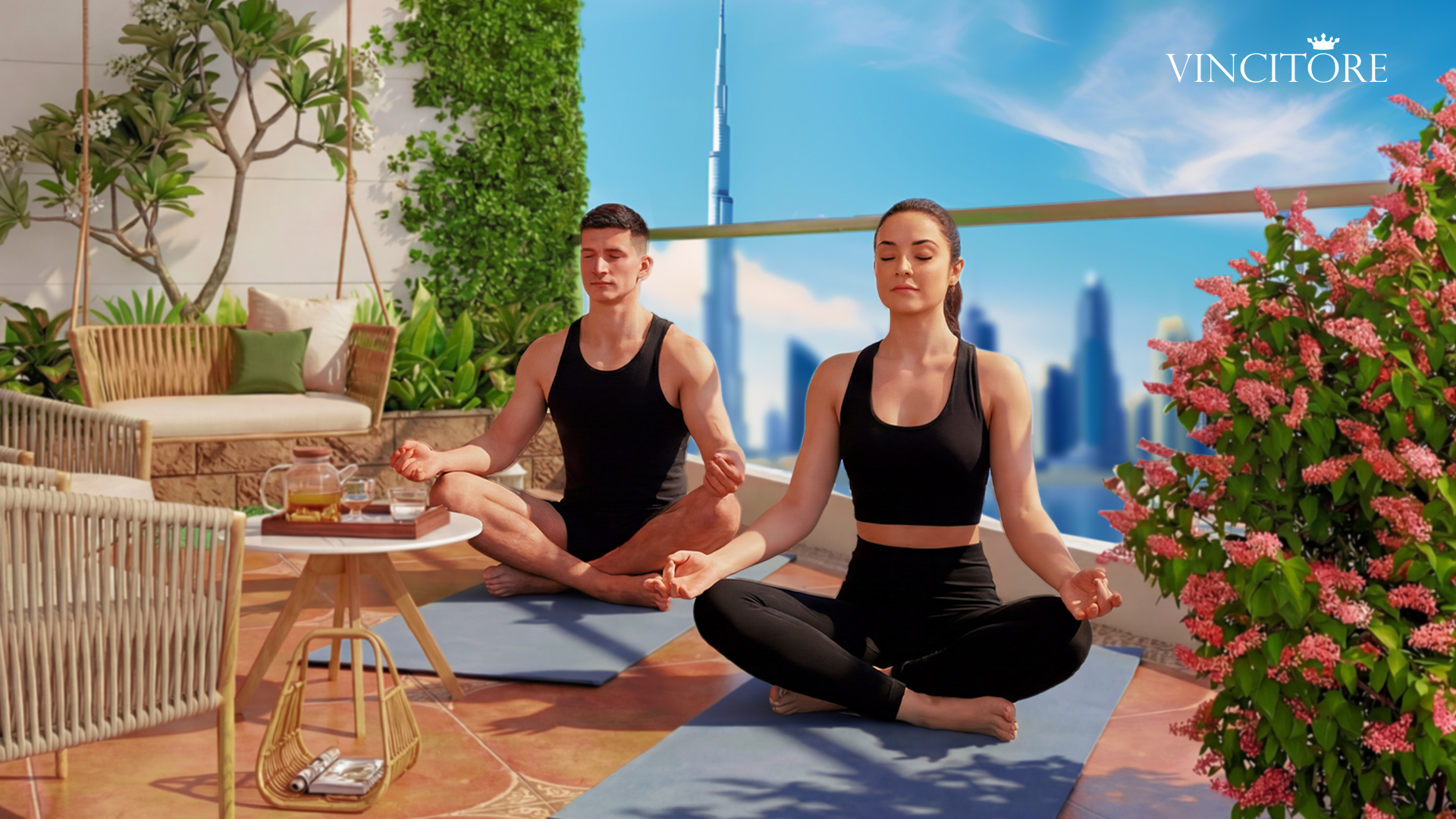
Wellness-centric amenities like meditation spaces, jogging tracks, and mindfulness zones
Community environments that promote social connection and movement
These features aren’t just beauty enhancements; they align with buyers’ priorities and influence market performance.
For example, wellness-oriented homes worldwide can command a 10–25% price premium compared to traditional properties, while rental demand for wellness communities often outpaces average market performance.
This aligns perfectly with the concept of Vincitore Wellness Estate, where spaces aren’t just homes but wellness-centered environments. By integrating wellness-led design, community spaces, and lifestyle-enriching amenities, it reflects future-proof living that resonates with global and local trends.
The Big Picture: Luxury & Wellness Value That Lasts
Dubai’s story isn’t just about transient market cycles or commodity real estate.
It’s about elevated experience, long-term value, and intentional design that supports how people live, not just where they live.
As wellness real estate continues its rapid growth trajectory both locally and globally, developers who excel in conscious living will set the benchmark for luxury living in the years to come.
BOOK A VIEWING
Download Brochure
Download Floor Plan
TALK TO OUR EXPERTS
ENQUIRE NOW
ENQUIRE NOW
Download Floor Plan
Download Brochure
Download Floor Plan
Download Brochure
Download Floor Plan
Download Brochure
Download Floor Plan
Download Brochure
Download Floor Plan
Download Brochure
Download Brochure
Download Floor Plan
BECOME A CHANNEL PARTNER
Download Floor Plan
Download Brochure
ENQUIRE NOW
REGISTER YOUR INTEREST
We use cookies to ensure that we give you the best experience on our website. If you continue to use this site we will assume that you are happy with it.