Call Now
Low-Stimulation Living

The Rise of “Low-Stimulation Living”, Why Calm Is Becoming Aspirational

There was a time when a full life looked loud. 

Back-to-back schedules. Constant notifications. A world always switched on. 

It felt productive. 

Until it didn’t. 

You scroll, but don’t feel relaxed. 

You rest, but don’t feel recovered. 

You sleep but still wake up tired. 

And slowly, the question begins to shift. 

What if the problem is not time, but environment?

The Research Behind Constant Stimulation

Modern life is saturated with input. 

Research from institutions like Harvard and the American Psychological Association shows that: 

  • The average person checks their phone 100 to 144 times a day  
  • Constant digital exposure is linked to higher stress and anxiety  
  • Multitasking reduces focus and cognitive performance  
  • High sensory environments increase mental fatigue  

This is not extreme behaviour. 

It is everyday living. A screen always nearby. Noise always present. 

Visual clutter competing for attention. 

Individually manageable. Together overwhelming. 

What Happens Inside the Brain

The brain is designed for rhythm, not constant input. 

Moments of focus followed by moments of rest. 

When that balance breaks, the body stays slightly alert. 

  • Stress hormones remain elevated  
  • Sleep becomes lighter, less restorative  
  • Attention fragments more easily  

Even your surroundings play a role. 

Clutter increases cognitive load. 

Noise keeps the brain on edge. 

Harsh lighting disrupts natural cycles. 

Over time, this affects not just how you feel, but how you function. 

The Real Estate Reframe

Homes were once designed to impress. 
Now, they are being judged by how they make you feel after living in them. 
Do they calm you down or keep you stimulated? 
Do they help you disconnect or keep you switched on? 
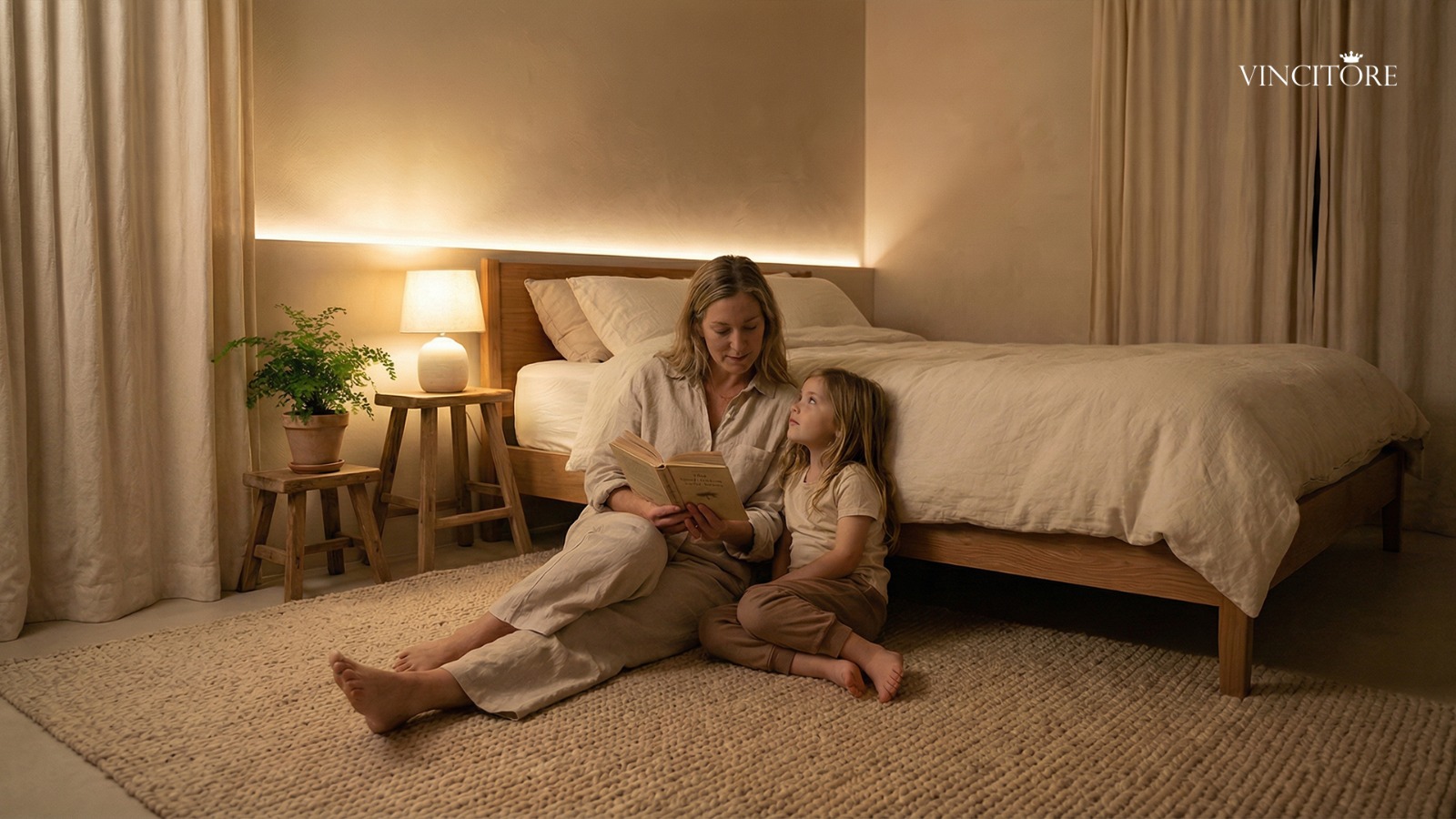
Low-stimulation living is not minimalism. It is intentional design. 

What Low-Stimulation Living Looks Like

It is not about empty spaces. It is about reducing unnecessary input. 

Homes designed for this include: 

  • Acoustic comfort that limits external and internal noise  
  • Visual clarity through clean layouts and balanced design  
  • Lighting aligned with natural rhythms  
  • Calm materials and textures that feel grounding  
  • Thoughtful layouts that create breathing space  

Individually subtle. Together transformative. 

A Shift in Buyer Mindset

Today’s buyers, especially high-income individuals, are seeking more than aesthetics. 

They are seeking control. 

Less noise. 

Less visual overload. 

More mental clarity. 

For those living high-performance lives, the home is no longer just a place to stay. 

It is a place to recover. 

Calm as a Competitive Advantage

In a world filled with constant stimulation, calm is rare. 

And rarity creates value. 

Calm is not accidental. 

It is designed. 

And increasingly, it is becoming one of the most desirable qualities a home can offer. 

A Philosophy That Prioritises Experience

At Vincitore, design goes beyond what is visible. 

It focuses on how a space supports the person living within it. 

In developments like Vincitore Wellness Estate, elements such as controlled acoustics, biophilic design, and thoughtfully planned layouts work together to reduce sensory overload and create balance. 

Because a home should not compete for your attention. 

It should restore it.

Download Brochure

Download Floor Plan

Download Floor Plan

Download Brochure

Download Floor Plan

Download Brochure

Download Floor Plan

Download Brochure

Download Floor Plan

Download Brochure

Download Floor Plan

Download Brochure

Download Brochure

Download Floor Plan

BECOME A CHANNEL PARTNER

Download Floor Plan

Download Brochure

ENQUIRE NOW

REGISTER YOUR INTEREST

TALK TO OUR EXPERTS

BOOK A VIEWING

ENQUIRE NOW

ENQUIRE NOW